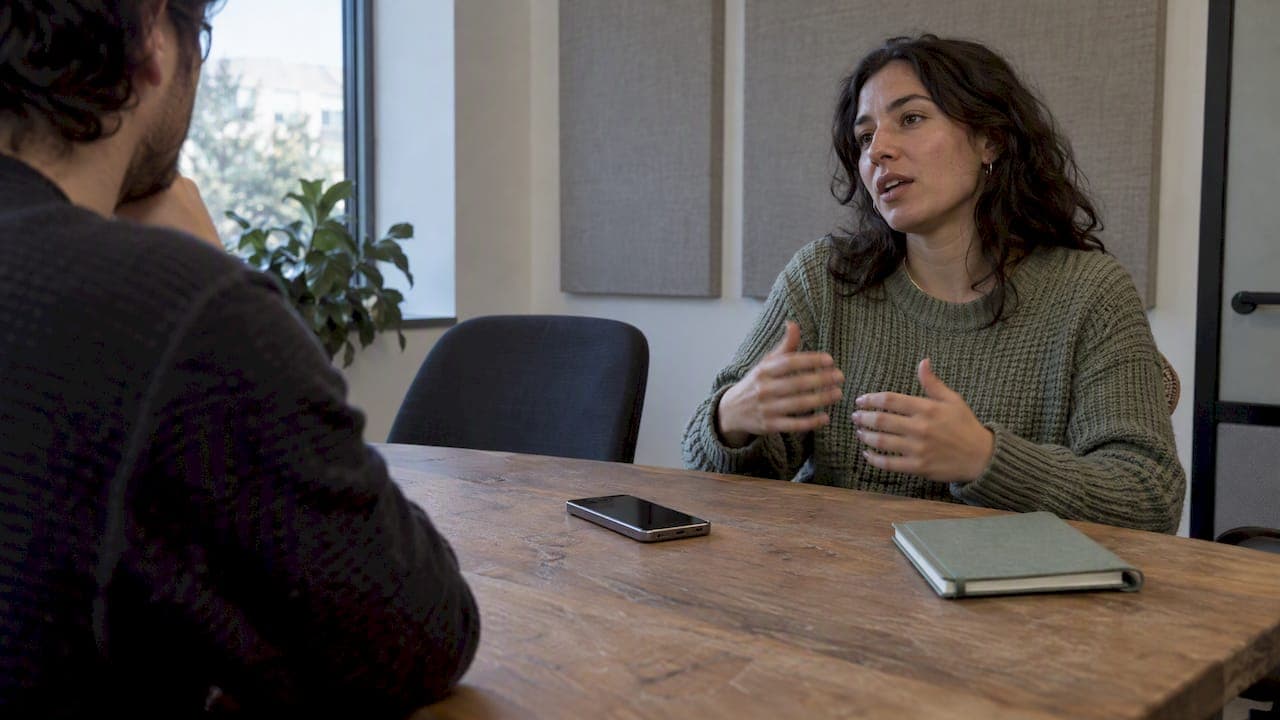
To protect interview privacy on iPhone, revoke unnecessary microphone and camera access, record locally with iCloud syncing turned off, confirm the orange or green sensor indicator whenever a mic or camera is live, and review App Privacy Report for anything that looks out of place. These steps draw on Apple's own privacy documentation and give you a working alternative to cloud notetakers, including on-device options like the one we build at Obsidian Ridge Labs.
TL;DR:
- Revoking microphone, camera, and photos permissions for unnecessary apps minimizes passive data access during sensitive interviews.
- Recording locally with apps like Voice Memos and disabling iCloud sync ensures your files stay off remote servers unless you manually transfer them.
- Regularly reviewing App Privacy Report and live sensor indicators helps detect unexpected app activity and verify sensors are off when not in use.
- Lockdown Mode and device protections are for high-threat scenarios and are generally unnecessary for routine interview privacy.
- Confirming third-party platform recording, controlling consent, and using on-device transcription minimize leaks beyond device settings.
Table of Contents
- Microphone and camera permissions: check, revoke, and audit
- Recordings and storage: secure local recording and disable cloud sync
- App Privacy Report and sensor indicators: audit past access and live verification
- Lockdown Mode, Focus, and quick device protections for sensitive conversations
- Third-party platforms, consent checks, and interview workflow controls
- On-device transcription and private interview workflows
- Author perspective: situational trade-offs and a brief checklist
- Optional: a privacy-first transcription app for interview notes
- FAQ
- Sources
Microphone and camera permissions: check, revoke, and audit
Before any sensitive conversation, the fastest privacy win is knowing exactly which apps can reach your microphone and camera, and turning off the ones that do not need to.
Open the permissions screens and work through each app methodically:
- Go to Settings, then Privacy & Security, then Microphone. Review every app listed and toggle off access for anything you do not recognize or no longer use.
- Go to Settings, then Privacy & Security, then Camera. Apply the same logic, paying attention to apps you rarely open.
- For apps you actually need during the interview (a video call app, a recorder), leave access on but plan to verify it works with a quick test.
- Run a five-second test recording or snapshot before the interview starts to confirm the permission change took effect and the app behaves as expected.
Photos access deserves its own look. Under each app's permission screen, you may see a choice between "Allow Access to All Photos" and "Selected Photos." Choosing the limited option means an app can only see images you explicitly share, which matters if you are capturing screenshots or documents connected to the interview.
Deciding between pre-authorizing an app and enabling access manually during the call depends on how much you trust the app's developer and how often you use it. A video conferencing app you rely on weekly is reasonable to leave authorized. A one-off app installed specifically for a single interview is safer left off until the moment you need it.
Pro Tip: Keep a mental habit of testing right after changing a permission, a short recording or photo capture confirms the setting took effect instead of leaving you to assume it did.
Recordings and storage: secure local recording and disable cloud sync
Where your recording lives matters as much as who can access your sensors. Local-only storage keeps the file off remote servers until you decide to move it.

Apple's built-in Voice Memos app is a straightforward way to capture audio locally. The app shows an orange indicator while recording, confirming the microphone is active, and you can prevent recordings from syncing to iCloud by checking your iCloud Drive and Voice Memos sync settings and turning that option off. For third-party recording or transcription apps, open the app's own settings and confirm whether automatic cloud backup is enabled, since many apps sync by default without asking.
A few checks help confirm where a file actually lives:
- A recording stored only locally will not appear on your other Apple devices through iCloud.
- Apps that sync to the cloud often show a small cloud icon or sync status next to the file.
- Exporting a file and checking whether it immediately appears elsewhere is a quick way to confirm sync behavior.
When you need to move a file off the device, AirDrop to a trusted device, an encrypted file transfer app, or a direct USB connection to a desktop machine are all reasonable options that avoid routing the file through a third-party server.
Deleting a recording from the Files app or Voice Memos removes it from the visible interface, but system-level deletion can leave fragments in caches or backups for a period of time. For highly sensitive recordings, apps that offer a dedicated secure-delete function provide more assurance than a standard delete.
App Privacy Report and sensor indicators: audit past access and live verification
Two native tools let you check both what happened in the past and what is happening right now: App Privacy Report and the sensor status indicators.
To turn on the report, go to Settings, then Privacy & Security, then App Privacy Report, and enable it if it is not already active. Once running, it logs which apps accessed your microphone, camera, location, and other sensors, along with the timing.
- Open App Privacy Report after a few days of normal use and scan the list for apps that accessed the microphone or camera more often than you expected.
- Tap into any entry to see the exact domains an app contacted, which can reveal data sent to third-party servers you were not aware of.
- If an app's access pattern looks wrong, revoke its permission immediately, then decide whether to force-quit, uninstall, or check its App Privacy label on the App Store for more context.
While a call or recording is active, watch for the live indicators: an orange dot means the microphone is in use, and a green dot means the camera (and often the microphone too) is active. Both appear in the status bar at the top of the screen and can be checked in more detail by swiping down to Control Center.
According to Apple's own privacy documentation, these indicators exist specifically so you can tell at a glance when a sensor is active, a core part of how iOS makes privacy control visible rather than hidden in settings menus.
Lockdown Mode, Focus, and quick device protections for sensitive conversations
Most interview situations are well covered by permission audits and sensor checks, but a few additional controls raise your protection level when the stakes are higher.
- Lockdown Mode, found under Settings, then Privacy & Security, then Lockdown Mode, restricts message attachments, certain web technologies, and incoming connections, and is intended for people facing a specific, elevated threat rather than routine use.
- Turning on Focus or Do Not Disturb before an interview prevents notifications from popping up on screen during a video call, which matters if you are sharing your screen.
- Auto-Lock set to a short interval reduces the chance of an unlocked phone being seen by someone else in the room.
- Disabling Background App Refresh and turning off Bluetooth or Wi-Fi auto-join for unfamiliar networks reduces the number of background connections an app could make during the conversation.
Reporting on Apple's privacy team notes that Lockdown Mode is designed for people facing targeted surveillance risks, not everyday privacy maintenance. For most interviews, permission checks, the App Privacy Report, and disabling cloud sync on recordings cover the realistic risk. Lockdown Mode makes sense when you have a specific reason to believe you are a target, such as working in a field where surveillance is a known occupational hazard.
Third-party platforms, consent checks, and interview workflow controls
Device settings only cover what happens on your iPhone. Many interviews run through platforms that record independently of iOS permissions entirely, so a workflow checklist matters as much as the settings themselves.
- Before the call, confirm who is recording, where the file will be stored, how long it will be retained, and who has access to it.
- Ask directly whether the platform uses an automated notetaker or meeting bot, since these tools often operate through the platform's own servers rather than through your device, meaning revoking iPhone permissions will not stop them.
- If you are not comfortable with a bot recording the session, request that it be disabled before the call starts, and confirm verbally that it has been.
- Use plain, direct language to establish consent at the start of the call, stating clearly whether you are recording and asking the other party to confirm the same.
Some recruiting platforms publish their own privacy controls. The Greenhouse Notetaker security and privacy FAQ is a useful example of how a vendor documents opt-out options and data retention for an automated notetaker, and checking a platform's equivalent documentation before an interview is a reasonable habit regardless of which tool is involved.
On-device transcription and private interview workflows
Keeping audio and transcripts on your device until you choose to export them narrows the number of places a sensitive conversation could leak.
- On-device transcription means the audio never has to leave your phone to become text, which removes an entire category of exposure that cloud-based transcription services carry.
- Our core processing runs entirely on-device, so no personal data is sent to remote servers by default, and any optional network connection is opt-in and clearly explained rather than hidden in a settings menu.
- A practical workflow looks like this: record locally with Voice Memos or a local-first app, transcribe on-device, review the text, then export only the parts you need, through AirDrop or a trusted file transfer, rather than a cloud link.
- This approach has limits. If you need to collaborate with a hiring team or meet an organization's retention policy, a cloud tool may still be necessary for that specific purpose.
Author perspective: situational trade-offs and a brief checklist
Most of the privacy risk in an interview setting comes from defaults nobody checked rather than from sophisticated surveillance. A ten-minute permissions sweep before a sensitive call closes most of the realistic gap, and it costs you nothing in convenience once it is routine.
Before an interview, run through this quickly: revoke mic and camera access for apps that do not need it, confirm Voice Memos iCloud sync is off, watch for the orange or green indicator during the call, and check App Privacy Report afterward. Escalate to Lockdown Mode only when you have a specific reason to believe you are a target, not as a default precaution.
— Alex
Optional: a privacy-first transcription app for interview notes
If you want transcripts without sending audio to a server, Echo Chamber Pro handles transcription entirely on your device and keeps the text local until you export it yourself.
- Fits a workflow where you record locally, transcribe without an internet connection, and export only what you choose to share.
- Right for readers who want an automatic transcript without routing audio through a cloud notetaker.
- Available as a monthly plan at $2.99 per month, a yearly plan at $29.99 per year, or a one-time purchase at $79.99.
Check Echo Chamber Pro for details and get set up before your next sensitive conversation.
FAQ
How do I disable Privacy settings on my iPhone?
Go to Settings, then Privacy & Security, and select the specific category, such as Microphone or Camera, to see which apps have access. Toggle off any app you do not want to have that permission, and the change takes effect immediately without restarting the phone.
How do I record an interview on my iPhone?
Voice Memos, built into iOS, lets you record audio locally and shows an orange indicator while the microphone is active. For a fully local workflow, confirm iCloud sync for Voice Memos is turned off, then export the file only when you are ready to share it.
What are some important settings I should change on my iPhone?
Review Microphone, Camera, and Photos permissions under Privacy & Security, disable iCloud syncing for sensitive recordings, and turn on App Privacy Report to track sensor access over time. For higher-risk situations, Lockdown Mode adds further restrictions, though it is intended for targeted threats rather than routine use.
How do I check that my iPhone is secure?
Open App Privacy Report under Privacy & Security to see which apps accessed your sensors and when, and watch for the orange or green status dot whenever your microphone or camera is active. Reviewing Apple's own privacy control documentation is a reliable way to confirm you understand what each indicator and setting actually does.