
You control who can see your Contacts, and the fastest way to check it is Settings, then Privacy & Security, then Contacts. That single screen lists every app that has requested access and lets you switch each one to Full, Limited, or Off. iOS 18 adds a Limited Access mode that shares only selected contacts, and the App Privacy Report shows exactly when an app used that access.
TL;DR:
- Most apps only need Limited Access to contacts, which allows you to select specific contacts that an app can see, instead of giving full access to your entire address book.
- The two-stage permission prompts introduced in iOS 18 enable apps to request only the contacts needed for a task, rather than broad access granted upfront.
- Managing contact sources involves turning off or removing accounts from Settings to prevent unwanted syncing and data sharing from services like iCloud, email, or work accounts.
- The App Privacy Report logs actual contacts access and network activity, helping identify apps that access contacts more frequently than necessary or suspicious domain connections.
- Regularly auditing permissions, contacts sources, and using Safety Check can significantly reduce ongoing privacy risks and ensure your contacts stay protected.
Table of Contents
- How to View and Change Which Apps Can Access Your Contacts
- Using Limited Access in iOS 18: Editing Selected Contacts
- Where Your Contacts Come From and How to Stop Syncing
- Auditing App Behavior With App Privacy Report and Safety Check
- A 60-Second Contacts Privacy Audit You Can Run Today
- Why On-Device Privacy Matters for Your Personal Data
- How to Share Contacts Without Oversharing Your Address Book
- Managing Contacts to Minimize Ongoing Privacy Risk
- How Third-Party Contact Management Apps Affect Your Privacy
- Using App Tracking Transparency Alongside Contacts Permissions
- Risks From Syncing Contacts to Social and Messaging Apps
- Building Contacts Privacy Into a Weekly Habit
- An Adjacent Option: Echo Chamber Pro for On-Device Privacy
- Where This Guidance Comes From
- Sources
- FAQ
How to View and Change Which Apps Can Access Your Contacts
Every app that has ever asked for your address book shows up in one place. Open Settings, tap Privacy & Security, then tap Contacts to see the full list along with each app's current permission level.
Apple's own guidance on managing Contacts access confirms this list is app by app and fully reversible: you can grant, limit, or revoke access at any time without losing the app itself.
To change a setting, follow these steps:
- Open Settings and go to Privacy & Security.
- Tap Contacts to see every app that has requested access.
- Tap an app name and choose Off, Limited Access, or Full Access.
Each option carries a distinct meaning:
- Full Access shares your entire address book with the app, including names, numbers, emails, and notes.
- Limited Access shares only the specific contacts you select, and you can edit that list later.
- Off removes the app's access entirely, though the app will typically prompt again the next time it needs a contact.
A messaging app that only needs to check for existing users rarely needs Full Access. A ride-share app that autocompletes a single delivery address is a case where Limited Access, granting just that one contact, does the job without exposing your whole list.
Using Limited Access in iOS 18: Editing Selected Contacts
iOS 18 changed how apps request Contacts permission. Instead of a single yes-or-no prompt, apps now trigger a two-stage authorization flow with four possible outcomes: Full Access, Limited Access, Deny, or a temporary one-time selection.
When you choose Limited Access, iOS opens a picker where you choose exactly which contacts the app can see. You can return to that list later through Settings, tap the app, then tap Edit Selected Contacts to add or remove names without resetting the whole permission.
Apple's developer session on the Contact Access Button explains the mechanics behind this shift. The new Contact Access Button and the contactAccessPicker API let developers ask for one additional contact in context, such as when you tap "share with a friend," without requesting broad address book access at all.
- The two-stage prompt separates "let me see some contacts" from "let me see everyone."
- The Contact Access Button lets an app request a single contact mid-task instead of upfront.
- contactAccessPicker returns only the contacts you actively choose, never the full list.
Pro Tip: When an app offers a one-time contact picker instead of a permission request, choose it. It gets the job done without adding a standing entry to your Contacts permission list.
Where Your Contacts Come From and How to Stop Syncing
Your address book on iPhone rarely lives in one place. It is often assembled from iCloud, one or more email accounts, and sometimes Exchange, CardDAV, or LDAP directories tied to a workplace.
Apple's documentation on managing accounts lays out where these contacts originate and what happens when you disconnect a source. To see and manage them:
- Open Settings, tap Contacts, then tap Accounts.
- Review each account listed and confirm whether Contacts syncing is turned on.
- Tap an account and switch off Contacts if you no longer want it contributing entries.
- Remove the account entirely only if you also want to stop its mail, calendar, or other syncing.
Turning off Contacts for an account is different from deleting the account outright, and the distinction matters. Apple warns that removing an account can delete its contacts from your iPhone and from every other device signed in to that same account, not just disconnect the sync. Turning off just the Contacts toggle keeps the account active for mail or calendars while stopping it from feeding your address book.
This is also a different action from revoking an app's Contacts permission. An app permission controls what a third-party app can read from Contacts already on your phone. An account toggle controls what data flows into Contacts in the first place. Both are worth checking, but they solve different problems.
Auditing App Behavior With App Privacy Report and Safety Check
Permissions tell you what an app is allowed to do. App Privacy Report tells you what it actually did. Apple's App Privacy Report documentation describes a built-in log showing how often each app accessed Contacts, along with the network domains it contacted, over the past several days.
To turn it on, go to Settings, then Privacy & Security, then scroll to App Privacy Report and enable it. Give it a day or two to collect activity before checking back.
- Look for apps accessing Contacts far more often than their function suggests.
- Cross-reference any Contacts access with the network domains listed for that same app.
- Treat an isolated access event as low concern; treat frequent access paired with unfamiliar domains as worth investigating.
Apple notes that Contacts access alone does not confirm data left your device. Some system features use Contacts on-device for tasks like caller ID or suggested sharing, so the App Privacy Report is most useful when you read the access log alongside the network activity, not in isolation.
Contacts synced through iCloud rely on the CardDAV standard, which does not include end-to-end encryption under standard iCloud settings. Apple's iCloud data security overview confirms that Advanced Data Protection strengthens encryption for many data categories, but Contacts remain protected primarily in transit and on Apple's servers rather than end-to-end by default.
If you ever need to cut off sharing quickly, such as after a lost phone or a relationship change, Apple's Safety Check feature offers an Emergency Reset that stops sharing with specific people and resets app privacy permissions in one pass. It is worth knowing this exists before you need it.
Round out your device security with a strong passcode, Face ID or Touch ID, and two-factor authentication on your Apple ID. None of these protect Contacts specifically, but they control who can unlock the phone and reach the address book in the first place.
A 60-Second Contacts Privacy Audit You Can Run Today
A short, repeatable routine catches most problems before they become one. Run through this list now, then again after installing any app that touches your address book.
- Open Settings, Privacy & Security, Contacts, and revoke access for any app that no longer needs it.
- Switch remaining app permissions to Limited Access where the app supports it, rather than Full.
- Check Settings, Contacts, Accounts, and turn off syncing for any source you do not recognize or no longer use.
- Enable App Privacy Report if it is off, and review the last few days of Contacts access.
- If something looks wrong or you need an immediate reset, use Safety Check to cut off sharing.
Pro Tip: Set a recurring reminder to repeat this audit monthly. New apps and software updates both tend to reset expectations quietly, and a five-minute check catches most of it.
Why On-Device Privacy Matters for Your Personal Data
Contacts are sensitive because they describe your relationships, not just your data. An app that uploads your address book to a remote server is effectively mapping who you know, even if it never touches the content of your messages.
On-device processing avoids that exposure by design: if an app never transmits Contacts off the phone, there is no server-side copy to be breached, subpoenaed, or repurposed later. Some developers build apps around this principle, keeping core processing local and treating any network connection as an explicit, opt-in choice rather than a default.
The practical test for any app asking for your Contacts is simple: does it ever need to leave the device to do its job, and does the app tell you when it does.
A permission granted once is a setting you have to remember to revisit. A design that never asks for more than it needs is a setting you never have to think about again.
How to Share Contacts Without Oversharing Your Address Book
Sharing a single contact or a small group does not require exposing your whole address book. The built-in Contacts app lets you select one entry, tap Share Contact, and send it as a vCard through Messages, Mail, AirDrop, or another app of your choice, without ever granting that app standing access to Contacts.

For groups, create a dedicated group inside the Contacts app first, then share individual members as needed rather than exporting the entire group as a file when possible. A shared vCard carries only the fields you have filled in for that person, so trimming unnecessary notes or extra numbers before sharing narrows what the recipient actually receives.
AirDrop is worth favoring over email or messaging apps when both people are nearby, since it transfers directly between devices without routing through a third-party server. When sharing over distance, Messages with end-to-end encryption between Apple devices is a stronger choice than plain email, which typically is not encrypted end-to-end by default.
Avoid apps that ask for full Contacts access just to enable a "share a contact" feature. That is a task the built-in share sheet already handles without any standing permission at all.
Managing Contacts to Minimize Ongoing Privacy Risk
Good habits reduce risk more reliably than one-time fixes. A few practices, kept up consistently, do most of the work.
Delete entries you no longer need. Old contacts from a job, an app trial, or a one-time transaction sit in your address book indefinitely unless you remove them, and every app with Contacts access can see them too.
Keep notes fields minimal. It is tempting to store sensitive details, like a medical note or a shared password hint, in a contact's notes field, but that field is included in Full Access grants and in any exported vCard.
Separate work and personal contacts where your phone setup allows it, particularly if you use a work-managed account alongside a personal Apple ID. Review new app permission prompts individually instead of tapping Allow by habit, since the prompt itself is the only moment you get to choose Limited Access instead of Full.
How Third-Party Contact Management Apps Affect Your Privacy
Apps that promise to clean up, merge, or organize your address book need Full Access to function, since deduplication and reformatting require reading every entry. That is a legitimate use case, but it also means the app sees everything, including notes, birthdays, and any linked social profiles.
The privacy tradeoff comes down to what happens after that access is granted. An app that performs cleanup entirely on-device and never transmits your address book elsewhere carries a fundamentally different risk profile than one that uploads contacts to a cloud service to power its matching or backup features.
Before installing a contact management app, check its stated data handling in the App Store listing and in Settings, Privacy & Security, App Privacy Report once it is running. If the app's network activity shows regular connections to external domains alongside frequent Contacts access, that pattern is worth investigating rather than assuming it is limited to on-device cleanup.
Using App Tracking Transparency Alongside Contacts Permissions
App Tracking Transparency and Contacts access control two different things, and conflating them leaves a gap. Tracking Transparency governs whether an app can follow your activity across other apps and websites to build an advertising profile. Contacts permission governs whether an app can read your address book at all.
An app can be denied tracking permission and still request Full Access to Contacts, and the two prompts appear separately. Check both: go to Settings, Privacy & Security, Tracking to see which apps have permission to track you, and revoke any that do not need it, then separately review the Contacts list described earlier in this guide.
The combination matters most for social and networking apps, which often want both: Contacts access to find people you know, and tracking permission to target ads based on that same network. Denying tracking while still allowing Contacts access does not stop the app from using your address book internally, so treat the two settings as independent decisions rather than a single checkbox.
Risks From Syncing Contacts to Social and Messaging Apps
Social and messaging apps frequently ask to "find friends" by matching your Contacts against their user base. That match typically requires uploading some or all of your address book to the app's servers, even for people who never join the service.
This creates a privacy exposure that extends beyond you: a contact who never installed the app can still end up in that company's systems because someone else uploaded their number or email. Several major platforms have faced scrutiny over exactly this kind of contact-matching feature.
To mitigate the risk, deny Contacts access when a social or messaging app first asks, and use its manual username or phone number search instead of the "find friends" shortcut. If you have already granted access, revisit Settings, Privacy & Security, Contacts and switch the app to Off or Limited Access. Limited Access is a reasonable middle ground for messaging apps that need to identify a small number of existing contacts, since it caps exposure to the people you actually choose to share.
Building Contacts Privacy Into a Weekly Habit
The audit above works best as a habit, not a one-time fix. I run it weekly, or immediately after installing any app that could plausibly want Contacts, since that first permission prompt is the easiest moment to choose Limited Access over Full.
When an app offers a one-time picker instead of standing access, I take it every time. It solves the immediate task without adding a permanent line item to review later.
Device security underpins all of this. A passcode, biometric lock, and two-factor authentication on your Apple ID are what keep the audit meaningful in the first place, since none of these Contacts settings matter if the phone itself is unlocked to a stranger.
— Alex
An Adjacent Option: Echo Chamber Pro for On-Device Privacy
The habits in this guide handle Contacts specifically, but the same question, does this app ever send my data off the device, applies to every tool on your phone. Some apps are designed around on-device processing, so core tasks like transcription and journaling run locally without a standing cloud connection.
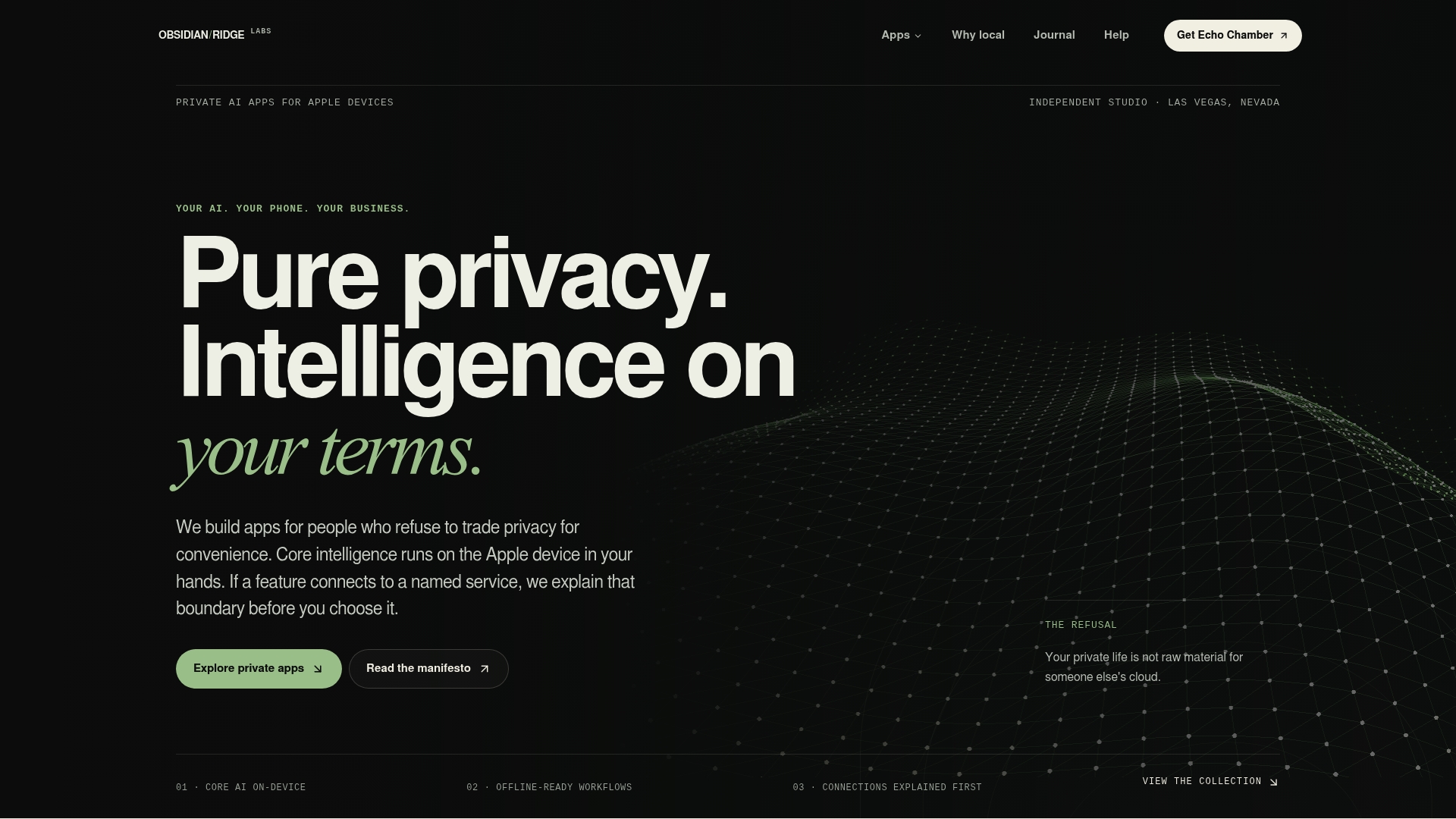
A stated approach for such apps treats any network connection as optional and disclosed, rather than a default you have to dig through settings to find. That is worth knowing if you have already tightened your Contacts permissions and want the rest of your apps to follow the same principle.
Echo Chamber Pro is available for $2.99 per month, $29.99 per year, or a one-time $79.99 purchase through the Echo Chamber Pro product page, where you can review the current feature set before deciding.
Where This Guidance Comes From
The steps and settings in this guide are drawn directly from Apple's own documentation and developer sessions, so you can verify any instruction before acting on it.
- Apple's Contacts access controls walk through the Settings path and Limited Access editing in detail.
- The WWDC24 session on the Contact Access Button covers the underlying APIs for developers.
- Apple's App Privacy Report and account management pages explain auditing and sync sources.
- The iCloud data security overview clarifies encryption scope for synced Contacts.
Sources
- Control access to your contacts on iPhone
- Meet the Contact Access Button - WWDC24
- About App Privacy Report
- Add or remove accounts on iPhone or iPad - Apple Support
- iCloud data security overview
FAQ
Can you make Contacts private on an iPhone?
Yes. Go to Settings, Privacy & Security, Contacts, and set each app to Off, Limited Access, or Full Access based on what it actually needs. iOS 18's Limited Access mode lets you share only specific contacts rather than your entire address book.
Can someone access my Contacts on my iPhone?
Only apps you have granted permission to can read your Contacts, and that list is visible and editable anytime in Settings, Privacy & Security, Contacts. Someone with physical access to an unlocked phone could also view Contacts directly, which is why a passcode and biometric lock matter alongside app permissions.
What is the secret iPhone setting that everyone should know?
There is no single secret switch, but App Privacy Report comes close: it shows exactly when each app accessed Contacts and which network domains it contacted, letting you catch unexpected activity that a permission list alone would not reveal. Enable it in Settings, Privacy & Security, App Privacy Report and check it periodically.
How do I stop someone from accessing my Contacts?
Remove or limit the relevant app's permission in Settings, Privacy & Security, Contacts, and check Settings, Contacts, Accounts for any sync source you no longer want feeding your address book. If you need an immediate, broad reset, Apple's Safety Check feature can stop sharing and reset app permissions in one step.