For privacy-conscious Apple users, the clearest recommendation is the Wove wardrobe app from Obsidianridgelabs, which processes everything on-device and requires no account. If you want alternatives, Stylebook is the most established iOS-only option with deep outfit-planning tools, Cladwell offers guided capsule building with a subscription model, and the Closet Capsule app on the App Store provides a local-first free tier with no account required.
Here is the shortlist at a glance:
- Obsidianridgelabs / Wove — Best for privacy-first Apple users; fully on-device, no account, no cloud upload
- Stylebook — Best for power users who want detailed outfit statistics and iOS depth
- Cladwell — Best for guided capsule building with AI outfit suggestions
- Closet Capsule — Best for a free, local-first start with no sign-up friction
- Whering — Best for sustainability tracking and wear-cost analytics
- Acloset — Best for AI-assisted auto-tagging and Android users
- Capsule Wardrobe Builder / CapsuleWardrobe Planner — Best for outfit template browsing and seasonal planning
On-device vs. cloud at a glance:
| App | Data handling |
|---|---|
| Wove (Obsidianridgelabs) | On-device only |
| Closet Capsule | Local-first (photos stay on device) |
| Stylebook | Local storage, optional iCloud backup |
| Cladwell | Cloud-based, account required |
| Whering | Cloud-based, account required |
| Acloset | Cloud-based, account required |
| Capsule Wardrobe Builder | Cloud-based, account required |
| CapsuleWardrobe Planner | Cloud-based, account required |
Pro Tip: Before downloading any capsule wardrobe planner app, check whether it requires an account at first launch. An app that forces account creation before you can add a single item is routing your data through a server from the start.
Table of Contents
- How do these capsule wardrobe apps compare on the features that matter?
- How we evaluated these apps
- Mini-reviews: the top capsule wardrobe apps in detail
- How do you choose the right capsule wardrobe app for your needs?
- How do you build a working capsule wardrobe in an app?
- Why does on-device privacy matter for wardrobe apps?
- Key Takeaways
- The tradeoff most wardrobe app reviews skip
- Wove by Obsidianridgelabs: the private on-device option
- Where to verify app claims before you download
How do these capsule wardrobe apps compare on the features that matter?
The table below covers the eight dimensions most likely to affect your choice: privacy, platform, price, upload ease, outfit planning depth, AI personalization, sustainability stats, and community features.
| App | Best for | Price model | Platform | Privacy | Upload / cataloging | Outfit planning | AI personalization | Sustainability stats | Sharing |
|---|---|---|---|---|---|---|---|---|---|
| Wove (Obsidianridgelabs) | Privacy-first Apple users | Paid / subscription (App Store) | iOS only | ✅ On-device, no account | Manual + auto background removal | Calendar, packing, outfit saving | On-device AI suggestions | Wear tracking | None |
| Closet Capsule | Free local-first start | Free + Pro tier (in-app purchase) | iOS | ✅ Local photos, no account required | Manual, local storage | Basic outfit planning | Limited | Basic | None |
| Stylebook | iOS power users | One-time purchase | iOS only | Local storage, optional iCloud | Manual, bulk import | Deep stats, calendar, packing | Limited | Cost-per-wear, wear count | None |
| Cladwell | Guided capsule building | Subscription | iOS + Android | Cloud, account required | Guided templates | AI outfit suggestions, calendar | AI-guided capsule | Limited | Community feed |
| Whering | Sustainability focus | Free + premium | iOS + Android | Cloud, account required | Auto-tagging, bulk upload | Outfit calendar, packing | AI suggestions | Cost-per-wear, carbon estimate | Social sharing |
| Acloset | Android + AI auto-tagging | Free + premium | iOS + Android | Cloud, account required | AI auto-tagging, bulk | Outfit calendar, packing | AI suggestions | Wear stats | Community |
| Capsule Wardrobe Builder | Outfit template browsing | Free + in-app purchases | iOS | Cloud | Manual + templates | 500+ outfit combos, calendar | Template-based | Limited | None |
| CapsuleWardrobe Planner | Seasonal planning + shopping | Subscription | iOS | Cloud, account required | Interactive builder | Seasonal planner, shopping list | Limited | Limited | None |
A few caveats worth noting. Platform parity is uneven: Wove, Stylebook, and Closet Capsule are iOS-only, so Android users should look at Acloset, Whering, or Cladwell. The "AI personalization" column reflects what each app advertises; the quality of suggestions varies significantly based on how many items you have cataloged. Apps marked "cloud, account required" transmit your wardrobe photos and usage data to external servers, which has real implications for ad targeting and profile building.
- Privacy column key: ✅ = on-device or local-first with no account required; no badge = cloud-based with account
- Price note: "Free + premium" means core features are free; advanced features require a paid upgrade or subscription
- Verify current pricing on each app's App Store listing before downloading, as subscription rates change
How we evaluated these apps
Transparency about the evaluation process matters here, because "capsule wardrobe app" covers a wide range of tools, from shopping-first style apps to genuine digital closet organizers. The focus throughout was on apps that help you work with clothes you already own.
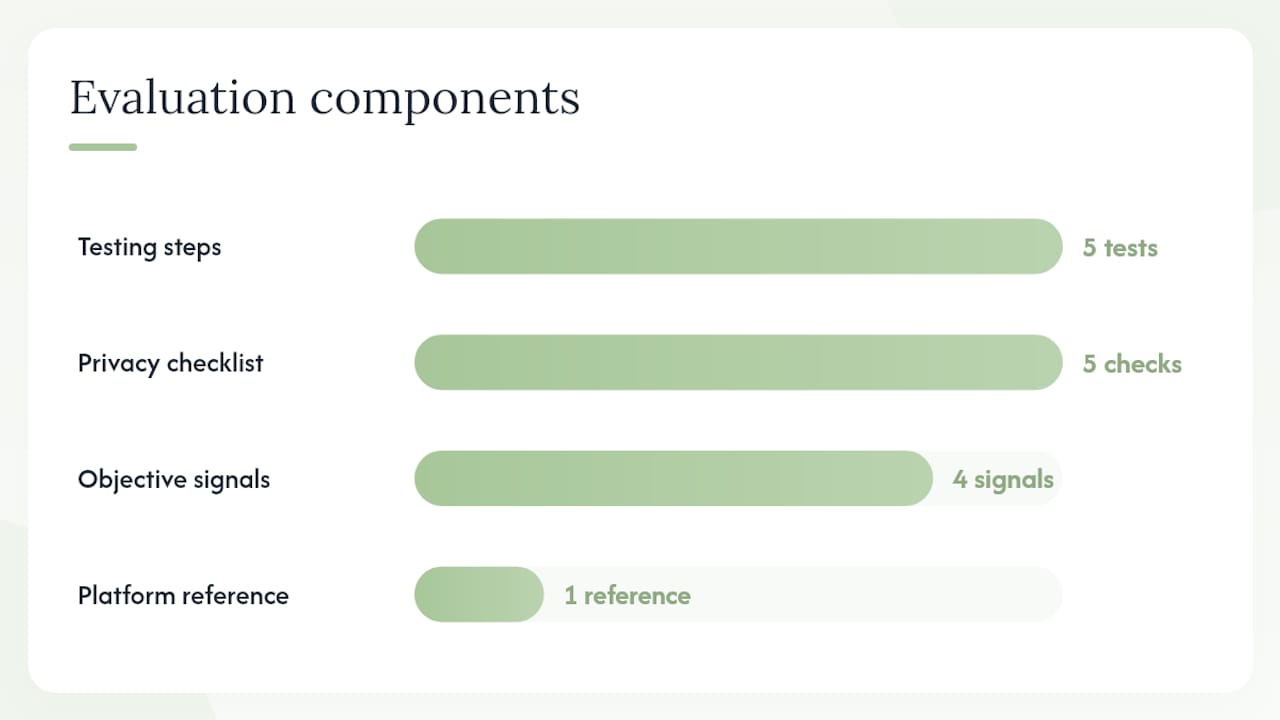
Testing steps used:
- Hands-on upload test: added 20–30 items per app to assess photo import speed, background removal quality, and tagging accuracy
- Outfit planning test: built at least five outfits per app and checked calendar integration, packing list creation, and outfit-saving workflows
- AI suggestion test: evaluated whether outfit suggestions drew from the user's actual catalog or defaulted to generic templates
- Export and backup test: attempted to export wardrobe data or back it up outside the app to assess long-term data ownership
- Privacy behavior test: monitored whether the app requested network access during photo import and whether account creation was mandatory
Privacy checklist applied to each app:
- Does the app require account creation before any feature is accessible?
- Does it upload photos to a remote server during or after import?
- Does the privacy policy mention "local," "on-device," or "device-only" storage?
- Are analytics or advertising SDKs disclosed in the privacy policy?
- Is there a documented data export or account deletion path?
Objective signals also factored in: App Store listing language, subscription model transparency, privacy policy specificity, and user review patterns on both the App Store and Google Play. For cross-platform apps, Google's platform privacy policy documentation provided a reference point for understanding what data-handling disclosures are required versus optional.
Mini-reviews: the top capsule wardrobe apps in detail
For a deeper comparison of how these apps perform across privacy, UX, and AI features, the best digital wardrobe apps guide from Obsidianridgelabs covers the category in broader detail.
Wove by Obsidianridgelabs
Best for: Privacy-conscious Apple users who want a wardrobe app that never touches a server.
Wove processes all wardrobe data on-device, meaning your photos, outfit logs, and wear statistics stay on your iPhone. No account is required to use any core feature. The app includes outfit planning, a packing capsule builder, and wear tracking, all running locally.
- Fully on-device AI outfit suggestions
- No account or sign-in required
- Wear tracking and cost-per-wear analytics
- Packing and travel capsule tools
- Clean, minimal iOS interface
Cons: iOS only; no Android version; no social or community features.
Platform & price: iOS; paid via the App Store (one-time or subscription, check current pricing on the App Store).
Privacy note: On-device processing confirmed; no cloud upload path for photos or usage data.
Use case: You have 40 items you want to catalog over a weekend without creating another account or wondering where your photos end up.
Closet Capsule
Best for: Users who want a free, local-first starting point with no sign-up friction.
The Closet Capsule App Store listing explicitly states that photos stay local and no account is required for core features. A Pro tier unlocks advanced capabilities via in-app purchase.
- Local photo storage, no account required
- Free core features with Pro upgrade available
- Basic outfit planning tools
Cons: More limited AI features than cloud-based alternatives; iOS only.
Platform & price: iOS; free with Pro in-app purchase.
Privacy note: Local-first by design; photos do not leave the device.
Use case: You want to test a capsule wardrobe planner app before committing to a paid subscription.
Stylebook
Best for: iOS users who want the deepest outfit statistics and long-term wardrobe analytics.
Stylebook has been the reference point for serious wardrobe tracking on iOS for years. It stores data locally with optional iCloud backup, tracks cost-per-wear, and includes a packing list builder. The one-time purchase model means no recurring subscription.
- Detailed cost-per-wear and wear-frequency analytics
- Packing list and travel capsule tools
- Local storage with optional iCloud sync
- One-time purchase, no subscription
Cons: No AI outfit suggestions; manual photo import only; iOS only.
Platform & price: iOS; one-time purchase.
Privacy note: Local storage; iCloud backup is optional and user-controlled.
Use case: You track spending carefully and want to know exactly which items earn their closet space.
Cladwell
Best for: Users who want a guided, AI-assisted approach to building a capsule from scratch.
Cladwell walks you through a structured capsule-building process and generates daily outfit suggestions from your catalog. The AI guidance is genuinely useful for users who are new to capsule wardrobe ideas and want direction rather than a blank canvas.
- Guided capsule-building workflow
- Daily AI outfit suggestions
- Available on iOS and Android
Cons: Cloud-based; account required; subscription pricing; less control over raw wardrobe data.
Platform & price: iOS and Android; subscription.
Privacy note: Cloud-based; account required; review the privacy policy for data retention details.
Use case: You are building your first capsule and want the app to guide the process rather than starting from a blank catalog.
Whering
Best for: Users who prioritize sustainability metrics and want to see the environmental cost of their wardrobe.
Whering includes cost-per-wear tracking, a carbon footprint estimate per item, and an outfit calendar. Auto-tagging speeds up the upload process. The social sharing features are optional.
- Carbon footprint and sustainability stats per item
- Auto-tagging and bulk upload
- Outfit calendar and packing tools
- iOS and Android
Cons: Cloud-based; account required; some features are behind a premium tier.
Platform & price: iOS and Android; free with premium upgrade.
Privacy note: Cloud-based; account required; check privacy policy for advertising data use.
Use case: You want to track not just what you wear but the environmental weight of each purchase.
Acloset
Best for: Android users who want AI auto-tagging to speed up the digitizing process.
Acloset's AI auto-tagging is one of the faster cataloging tools available on Android. It identifies category, color, and occasion automatically, which cuts manual entry time significantly. The community features are there if you want them, but easy to ignore.
- Strong AI auto-tagging on upload
- Available on iOS and Android
- Outfit calendar and packing list
- Community and social features
Cons: Cloud-based; account required; free tier has limitations.
Platform & price: iOS and Android; free with premium tier.
Privacy note: Cloud-based; account required; auto-tagging sends photos to remote servers for processing.
Use case: You have 60+ items to catalog and want the app to do most of the tagging work.
Capsule Wardrobe Builder and CapsuleWardrobe Planner
Two distinct apps share similar naming, which causes real confusion in the App Store.
Capsule Wardrobe Builder positions itself around 50+ essential items and over 500 outfit combinations, with calendar planning and in-app purchases. It works well as a template browser if you want pre-built capsule frameworks rather than a blank digital closet.
CapsuleWardrobe Planner takes a different angle: an interactive seasonal wardrobe builder with a shopping list generator and e-commerce integration. The subscription model funds ongoing feature development, and the shopping list feature is genuinely useful for planned purchases.
Cons for both: Cloud-based; account required; more shopping-oriented than wear-tracking-oriented.
Platform & price: iOS; in-app purchases or subscription (see App Store listings for current pricing).
Privacy note: Cloud-based for both; review individual privacy policies.
Pro Tip: If you see two apps with nearly identical names in the App Store, check the developer name and the App Store ID before downloading. The Capsule Wardrobe Builder and CapsuleWardrobe Planner are separate products with different feature sets.
How do you choose the right capsule wardrobe app for your needs?
The decision comes down to four variables: platform, privacy tolerance, time available to digitize, and which features you will actually use week to week.
Decision flow:
- Platform first. iOS only? Wove, Stylebook, and Closet Capsule are your strongest options. Need Android? Acloset, Whering, or Cladwell.
- Privacy tolerance. Are you comfortable creating an account and uploading photos to a cloud server? If not, the field narrows to Wove, Closet Capsule, and Stylebook.
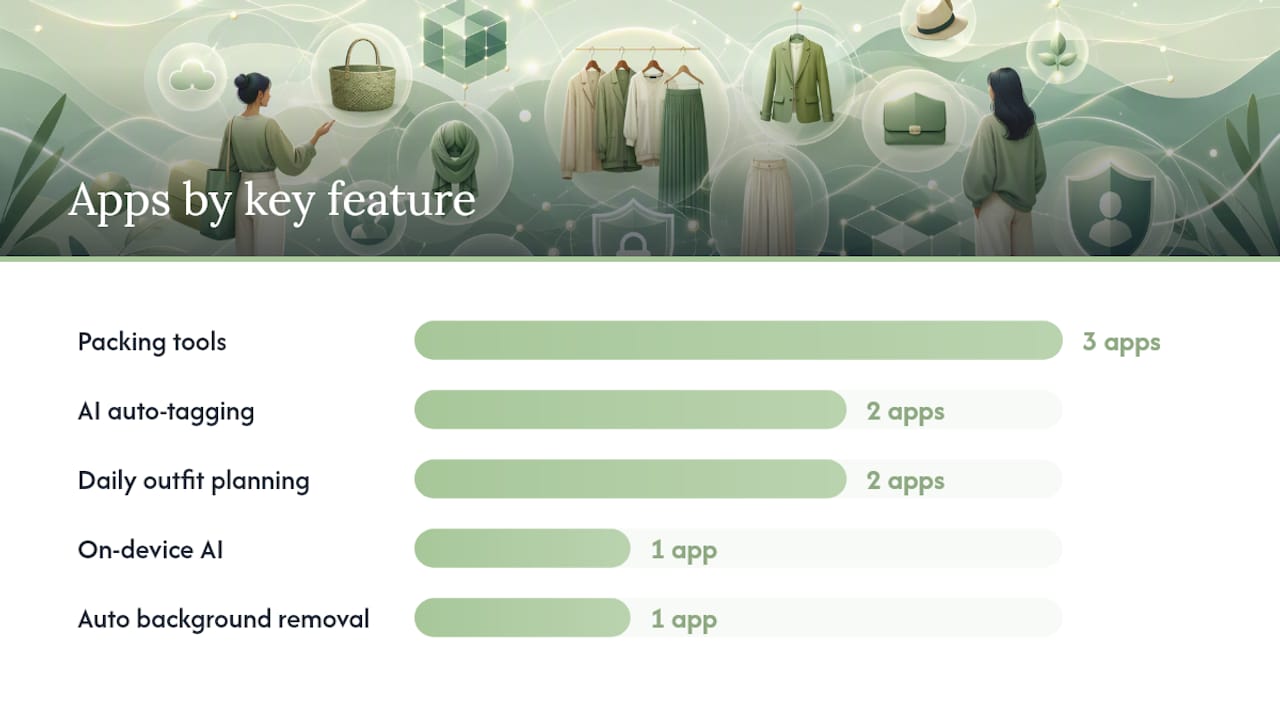
- Time to digitize. If you have 50+ items and limited time, prioritize apps with AI auto-tagging (Acloset, Whering) or auto background removal (Wove). Manual-only workflows take significantly longer.
- Primary use case. Daily outfit planning? Cladwell or Acloset. Sustainability tracking? Whering. Deep analytics and cost-per-wear? Stylebook or Wove. Outfit templates? Capsule Wardrobe Builder.
- AI features. Do you want AI suggestions based on your actual catalog, or are you comfortable with template-based recommendations? On-device AI (Wove) differs meaningfully from cloud-processed suggestions.
- Travel and packing. If packing capsules matter to you, Stylebook, Wove, and Whering all include dedicated packing list tools.
Privacy questions to ask before downloading:
- Does the app require an account before you can add a single item?
- Does the privacy policy use the words "local," "on-device," or "device-only"?
- Does the app request network access during photo import?
- Is there a clear data export or account deletion option?
Red flags:
- Ad-supported model with no paid tier (your wardrobe data funds the ads)
- No mention of "local" or "on-device" anywhere in the privacy policy
- No data export option (you cannot leave without losing everything)
- Opaque backup: no documentation of where your data is stored or how to retrieve it
Example scenario: You have 35 items, an iPhone, and strong privacy concerns. You have about three hours on a Saturday. The right pick is Wove or Closet Capsule. Both are iOS-only, both keep photos local, and neither requires an account. Wove adds on-device AI suggestions and wear tracking; Closet Capsule's free tier lets you test the workflow before spending anything.
Understanding how AI usage telemetry works in apps more broadly can also help you evaluate what "AI personalization" actually means in practice, and what data it requires. AI usage intelligence covers that distinction clearly.
How do you build a working capsule wardrobe in an app?
The process has three phases. Expect the full setup to take two to four hours for 30–50 items if your app supports auto background removal; manual-only workflows run considerably longer.
Phase 1: Digitize your existing clothes
Steps:
- Lay each item flat on a neutral surface (white floor or table works well) or hang it against a plain wall.
- Shoot in natural light; avoid shadows across the item.
- Use your app's background removal tool if available. This single step cuts editing time more than any other.
- Batch by category: photograph all tops, then bottoms, then outerwear. Switching categories mid-session slows tagging.
- For 30–50 items with auto background removal, budget roughly two hours for photography and initial import.
Pro Tip: Photograph items in batches of 10, import each batch before moving to the next. This prevents a large backlog of untagged photos and lets you catch any quality issues early.
Phase 2: Organize and tag
Once items are in the app, tagging strategy determines how useful the app becomes.
- Tag each item with at minimum: category (top, bottom, outerwear, shoes, accessory), color, and season
- Add occasion tags (casual, work, formal) if your wardrobe spans multiple contexts
- Create at least two capsule groups: everyday and travel/packing
- Enable wear tracking from the start; the data becomes useful after 30–60 days of actual use
- Flag items you have not worn in the past six months as candidates for review
Phase 3: Plan and use
- Build five to ten saved outfits immediately after tagging; this gives the AI (where available) enough signal to generate useful suggestions
- Use the calendar or outfit scheduler to plan a week ahead; this is where the app pays for itself in decision time saved
- Run a packing capsule before any trip: filter by season and occasion, then select 10–15 items that generate the most outfit combinations
- After 60 days, review your wear statistics. Items with zero or near-zero wear are "ghost items." Removing or replacing them is the core discipline of a working capsule wardrobe
Why does on-device privacy matter for wardrobe apps?
Most wardrobe apps store photos and usage logs on remote servers. That data path creates two real risks: your wardrobe photos can be used to build an advertising profile, and a server breach exposes images of your home and personal belongings. Ad-supported apps are the highest-risk category, because the business model depends on using behavioral data to target ads.
Privacy verification checklist:
- Search the app's privacy policy for the words "local," "on-device," and "device-only." Their absence is informative.
- Check whether the app requests network access during photo import (airplane mode test below).
- Look for disclosed analytics SDKs (common ones: Firebase, Amplitude, Mixpanel). Their presence means usage data leaves the device.
- Confirm whether a data export option exists and what format it uses.
- Check whether account deletion actually removes your data from the server, or only deactivates the account.
For a structured walkthrough of how to verify on-device behavior on Apple devices, the on-device AI privacy verification guide from Obsidianridgelabs covers the specific steps in detail.
Obsidianridgelabs builds private AI apps for Apple devices with all core processing performed locally. The Wove wardrobe app follows this architecture: no account required, no photo upload, no advertising model.
Pro Tip: To test whether an app uploads photos during import, enable airplane mode before adding a new item. If the import fails or the app throws a network error, photos are leaving the device. If it succeeds normally, local processing is confirmed for that step.
Key Takeaways
The strongest capsule wardrobe app for privacy-conscious Apple users is Wove by Obsidianridgelabs, which keeps all wardrobe data on-device with no account required and no cloud upload path.
| Point | Details |
|---|---|
| Privacy determines the shortlist | On-device apps (Wove, Closet Capsule, Stylebook) keep photos local; cloud apps require an account and upload data to remote servers. |
| Platform availability is uneven | Wove, Stylebook, and Closet Capsule are iOS-only; Acloset, Whering, and Cladwell cover both iOS and Android. |
| Setup time scales with tooling | Auto background removal and AI auto-tagging cut digitizing time for 30–50 items to roughly two to four hours versus significantly longer for manual-only workflows. |
| Wear tracking is the core value | Apps that log wear frequency and cost-per-wear turn a static catalog into a decision tool; ghost items (zero-wear pieces) become visible after 60 days of use. |
| Obsidianridgelabs / Wove | The recommended privacy-first option: on-device AI, no account required, wear tracking, and packing capsule tools, available on iOS via the App Store. |
The tradeoff most wardrobe app reviews skip
The dominant narrative around capsule wardrobe apps focuses on AI outfit suggestions and aesthetic UI. What gets less attention is the structural tension between the two things most users actually want: genuine AI personalization and genuine privacy. Cloud-based AI is better at personalization today, because it can draw on aggregated pattern data across many users. On-device AI works only from your own catalog, which means suggestions improve more slowly but your data never leaves your phone.
That tradeoff is real, and it is worth naming directly rather than pretending every app delivers both equally. For most users building a capsule from existing clothes, the personalization gap matters less than it sounds. A catalog of 40–60 well-tagged items gives any competent outfit algorithm enough signal to be useful. The privacy gap, by contrast, is permanent: once your wardrobe photos and behavioral data are on a remote server, you cannot retrieve them.
The other underappreciated point is that the best capsule wardrobe planner app is the one you will actually use for 90 days. Setup friction is the biggest predictor of abandonment. Apps that require account creation, email verification, and onboarding surveys before you can add a single item lose users before the catalog is useful. Local-first apps with immediate access tend to build the habit faster, even when their AI features are more limited at launch.
Wove by Obsidianridgelabs: the private on-device option
Wove is Obsidianridgelabs' digital wardrobe app, built on the same on-device AI philosophy that runs across the company's full product suite. All wardrobe photos, outfit logs, and wear statistics are processed and stored locally on your Apple device. No account is required. There is no advertising model, and no data is transmitted to external servers during normal use.
Key features: on-device AI outfit suggestions, wear tracking and cost-per-wear analytics, packing capsule builder, auto background removal on import, and a clean iOS interface designed for daily use. Backup and export options are available for long-term data ownership without cloud dependency.
Wove is available exclusively for Apple devices via the App Store. For readers who want to verify the on-device claims before downloading, the privacy verification guide walks through the exact steps to confirm local processing behavior on iPhone. To see the full Obsidianridgelabs product suite, visit obsidianridgelabs.com.
Where to verify app claims before you download
Before committing to any capsule wardrobe app, check these primary sources directly. Marketing copy on an app's website is not a substitute for the actual App Store listing, privacy policy, or platform documentation.
- App Store listings (Apple): Each app's official page on apps.apple.com shows current pricing, platform availability, in-app purchase details, and the linked privacy policy. Search for "local" or "on-device" in the privacy policy text.
- Closet Capsule on the App Store: Confirms local-first photo handling and the free/Pro tier structure directly from the listing.
- Capsule Wardrobe Builder on the App Store: Verifies the 50+ essentials, 500+ outfit combinations, and in-app purchase model.
- CapsuleWardrobe Planner on the App Store: Confirms the interactive builder, subscription model, and e-commerce integration features.
- Google Play / Android apps: For cross-platform apps, Google's privacy policy documentation explains what data disclosures Android apps are required to make. Check the "Data safety" section on each app's Play Store page for a plain-language summary of what data is collected and whether it is shared.
- Obsidianridgelabs privacy verification guide: The on-device AI verification guide provides step-by-step instructions for confirming local processing behavior on Apple devices, including the airplane mode import test.